 English
 Indian
 العربية
 Español
 Deutsch
 Türkçe
 Русский
 Français (Afrique)

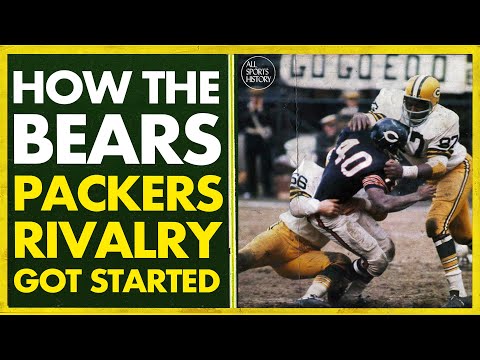
The Green Bay Packers are the Chicago Bears' biggest rival. This NFL rivalry is the league's oldest continuous feud, predating the Super Bowl era. The two teams meet twice every season, and the rivalry defines careers and coaching tenures in ways no other matchup can match.
The Packers Reign Supreme
The Chicago Bears and Green Bay Packers meet twice every season, and those games carry weight far beyond the standings. The rivalry is the NFL's oldest continuous feud, predating the Super Bowl era and surviving every structural change the league has undergone. When these teams play, the results shape division titles, coaching decisions, and the emotional arc of an entire fan base's year. The Bears have not dominated the series in decades, which only deepens the frustration. Every Green Bay victory extends a historical pattern; every Chicago win feels like a temporary shift in the balance.
The rivalry functions because both franchises measure themselves against the other regardless of their overall record. A losing Bears team that sweeps Green Bay feels fundamentally different than a winning team that gets swept. The same applies in Green Bay. This mutual obsession creates genuine stakes even in down years, and it explains why ticket prices spike and regional sports radio devotes hours to the buildup. The mechanism is straightforward: shared history plus recurring high-stakes matchups equals lasting animosity.
Recent games have tightened the competition. The Packers won the 2021 matchup 45-30 in Green Bay, then swept the 2022 season series with scores of 27-10 and 28-19. These results reflect Green Bay's recent dominance, but the closeness of individual plays and the enduring cultural weight of the rivalry keep each meeting must-watch television for both fan bases.

Why Divisional Rivals Dominate
The NFL's scheduling structure naturally cultivates divisional hatred. Every team plays each division opponent twice per year, creating the repetition necessary for genuine rivalry. The NFC North forces Chicago to face Green Bay, Minnesota, and Detroit annually, building familiarity that transcends simple competition. These teams know each other's coaching staffs, player personalities, and historical grievances. The frequency creates natural storylines that carry across seasons.
Outside the division, scheduling rotates too quickly to build equivalent animosity. The Bears face each non-divisional opponent once every four years in the current format, which is insufficient time to develop the scar tissue that defines real rivalry. Even teams with lengthy historical connections struggle to maintain relevance when they meet so infrequently.
The Search Beyond Green Bay
Looking past the NFC North, the Bears face a definitional challenge. True rivalry requires both repetition and meaningful stakes, and Chicago's out-of-conference schedule rotates before either element can fully develop.
The Arizona Cardinals present the strongest historical case among non-divisional opponents, with 98 all-time meetings rooted in the franchise's Chicago origins before the 1960 relocation. That shared origin creates a unique connection, but the games have rarely carried championship implications in recent decades. Without stakes, the matchup feels more like archaeology than rivalry.

The Washington Commanders offer a more contemporary narrative. The 2024 and 2025 NFL Drafts created a direct comparison: Washington selected Jayden Daniels second overall in 2024, while Chicago took Caleb Williams first overall in 2025. Both franchises pinned their futures to quarterback prospects who will be measured against each other for the next decade. Recent seasons have delivered competitive games between the teams, adding substance to the narrative.
The limitation is timing. These franchises have not met in games with playoff implications since the 1980s. Regular-season matchups between them remain interesting but not essential until they collide in January with something meaningful on the line. The Daniels-Williams dynamic could change this, but the rivalry requires more than draft positioning to reach Packers-level intensity.
The One-Sided Narratives
Some perceived rivalries exist primarily in the minds of one fan base. Carolina Panthers fans harbor resentment toward Chicago because the Bears extracted a premium draft haul for Bryce Young, then watched the quarterback struggle in Charlotte. This grievance makes sense from the Carolina perspective, but Chicago fans have little reason to reciprocate the animosity. The Bears moved on from the situation with significant draft capital and no particular emotional investment in the outcome.
The Miami Dolphins present a similar asymmetry. Historical playoff meetings and the occasional high-profile game create moments of tension, but the geographic distance and infrequent matchups prevent genuine rivalry from developing. Miami remains a destination for free agents and a occasional obstacle, not a fixed point of hatred in the Bears' calendar.
These one-sided dynamics illustrate why the Packers maintain their position at the top of the hierarchy. Green Bay rivalry requires no artificial maintenance. The games matter because both sides care, regardless of the standings, and the history provides endless material for the next generation of fans.
What Actually Defines a Bears Rivalry
The Bears' rivalry landscape breaks into clear tiers. The Packers occupy the top position by every meaningful measure: historical depth, cultural significance, and mutual animosity that persists through losing seasons. This rivalry defines careers and coaching tenures in ways that other matchups simply cannot match.
The Vikings and Lions have their moments, particularly when the division title hangs in the balance, but neither commands the same emotional real estate as the Green Bay matchup. Minnesota's recent success has created new tensions, and Detroit's rise adds another layer to NFC North competition, but the Packers remain the standard against which all other rivals are measured.
- The Packers and Bears meet twice every season with games that shape division titles and coaching decisions
- The Bears have not dominated the series in decades, which deepens the frustration for Chicago fans
- The NFC North forces Chicago to face Green Bay, Minnesota, and Detroit annually, building familiarity
- Non-divisional opponents like the Cardinals (98 all-time meetings) lack recent championship stakes
- The Vikings and Lions have their moments but don't command the same emotional real estate as Green Bay
- The 2024-2025 draft selections of Jayden Daniels (Washington) and Caleb Williams (Chicago) created a new comparison narrative
- Ticket prices spike and regional sports radio devotes hours to the buildup of Bears-Packers games
The emerging Commanders storyline represents the most plausible candidate for a new significant rivalry, but it needs time and playoff encounters to develop. The Caleb Williams-Jayden Daniels comparison will drive conversation for years, and if both quarterbacks develop into stars, the league may eventually view this matchup differently. For now, it remains a storyline with potential rather than an established rivalry.
The Cardinals demonstrate the ceiling for non-divisional rivals with historical connections. Even with 98 meetings and shared franchise history, the lack of recent meaningful games prevents the relationship from reaching genuine rivalry status. History alone cannot sustain the animosity that makes rivalries meaningful.
- The Bears-Packers rivalry is the NFL's oldest continuous feud, dating back to before the Super Bowl era
- Green Bay dominated the recent matchups, sweeping the 2022 series after a 45-30 win in 2021
- The rivalry transcends standings - both franchises measure themselves against each other regardless of record
- Divisional scheduling (twice per year) creates the frequency needed for genuine rivalry to develop
- The Caleb Williams-Jayden Daniels draft comparison with Washington could develop into a new significant rivalry
The Stakes Beyond the Field
When the Bears and Packers meet, the consequences ripple through the entire organization. A victory in Green Bay can salvage a disappointing season and buy a coach additional time. A loss can accelerate front office changes and reshape the team's long-term direction. The games carry this weight because the rivalry means something to everyone involved, from the ownership group to the fans who watch every January possibility evaporate or persist.
This is what separates the Packers from every other Bears opponent. The historical dominance Green Bay has maintained in recent decades adds another layer. Chicago has lost multiple consecutive games in the series, and each defeat reinforces the narrative of a franchise that cannot solve its oldest problem. The games matter because they represent something larger than two teams competing for a win.
The rivalry functions because both franchises measure themselves against the other regardless of their overall record
The Packers occupy the top position by every meaningful measure: historical depth, cultural significance, and mutual animosity
These one-sided dynamics illustrate why the Packers maintain their position at the top of the hierarchy
The mechanism is straightforward: shared history plus recurring high-stakes matchups equals lasting animosity
The Bears' other rivalries serve different functions. Some provide occasional drama. Others exist primarily in the memory of older fans. The Commanders may eventually join the top tier if the Williams-Daniels rivalry produces the playoff matchups that history has thus far denied. But for now, and for the foreseeable future, Green Bay remains the answer to the question of Chicago's most important rivalry.